
- Perceiving the Environment: They receive and analyze inputs such as user instructions, surrounding conditions, or data.
- Making Judgments and Decisions: They determine the appropriate action to take.
- Executing Actions: They carry out the chosen action.
- Learning from Feedback: They learn from outcomes to improve future responses.
1. Roles and Capabilities
2. Components
Put simply, LLMs are one of the components of AI agents. AI agents are systems that extend the capabilities of LLMs with plugins, tool usage, memory, and decision making to perform more complex tasks.
How Are AI Agents Used in Real Life?
AI agents are now easy to spot in our daily lives. They’ve evolved beyond simple chatbot functions and are establishing themselves as intelligent assistants capable of predicting human behavior and making autonomous decisions. Here are some real world examples:Customer Service Chatbots
One of the most widespread forms of AI agents is customer service chatbots. These are commonly seen in online stores, banks, and telecom companies. They can quickly respond to basic inquiries like tracking deliveries, handling payment errors, or processing refund requests. More advanced bots go beyond giving answers they understand customer intent and automate necessary tasks. They work 24/7, independent of business hours, which improves customer satisfaction and reduces labor costs.ARGOS also offers chatbot services. However, not all chatbots are AI agents. Depending on their capabilities, some may be classified as AI agents, while others remain simple automated response systems.Personal Assistant Apps (e.g., Google Assistant, Apple Siri, Amazon Alexa)
AI assistants embedded in smartphones or smart speakers are classic examples of AI agents. They recognize voice commands and perform tasks such as setting alarms, playing music, checking the weather, and sending messages. For instance, if you say, “Schedule a meeting at 10 AM tomorrow,” the assistant will add it to your calendar and set a reminder. These assistants improve over time by learning from repeated interactions and adapting to user preferences.What Will AI Agents Be Capable of in the Future?
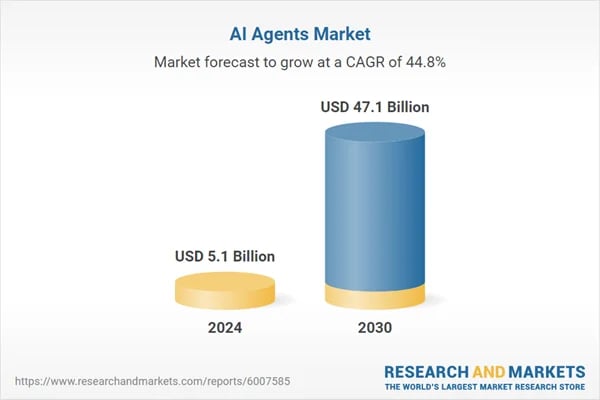
AI agents already do impressive work, but they are expected to become far more capable and human-like. Future AI agents will function as around-the-clock personal assistants who know you better than anyone. Microsoft Copilot is a prime example of a real world AI agent. Microsoft integrated AI into its Office suite (Word, Excel, PowerPoint, etc.), creating Copilot to assist users with their work. Copilot is not just a tool it understands instructions and independently determines appropriate actions. This makes it stand out from traditional automation tools.The AI Agent Market in 2025

Regional Trends
-
North America (U.S. & Canada) is projected to hold the largest market share in 2024. The region’s quick adoption of new technologies, solid digital infrastructure, and significant investments by tech giants like Google, Microsoft, and IBM drive growth. For example:
- IBM develops AI solutions for banks and healthcare institutions.
- Walmart uses AI agents to optimize supply chains and improve customer service.
-
Asia Pacific is expected to be the fastest-growing region during the forecast period. This growth is fueled by rapid digitalization, technological advancements, and a growing pool of tech-savvy talent.
- In China, companies like Alibaba and JD.com use AI agents to enhance customer service and reduce logistics costs.
- In Japan, SoftBank operates a customer support system combining robotics and AI, reflecting high national interest in automation.
Frequently Asked Questions (FAQ) About AI Agents
Q1. What does an AI agent do?
An AI agent understands goals, analyzes situations, uses tools, and performs tasks autonomously. It acts as a virtual assistant that processes tasks rather than just answering questions.Q2. Is ChatGPT an AI agent?
The base version of ChatGPT is a powerful LLM but not a full AI agent. However, when integrated with plugins, memory, and APIs (e.g., ChatGPT Pro or Custom GPTs), it takes on AI agent-like characteristics.Q3. What are the 5 types of AI agents?
- Simple Reflex Agents React only to current conditions.
- Model-Based Reflex Agents Use internal models to consider past states.
- Goal-Based Agents Plan actions to achieve specific goals.
- Utility-Based Agents Choose actions that maximize expected utility.
- Learning Agents Improve performance through experience and feedback.